Loyalty Tiers and Their Impact on Recurring User Activity Within Online Betting Platforms
Bianca Meier · Jul 21, 2026
Loyalty Tiers and Their Impact on Recurring User Activity Within Online Betting Platforms
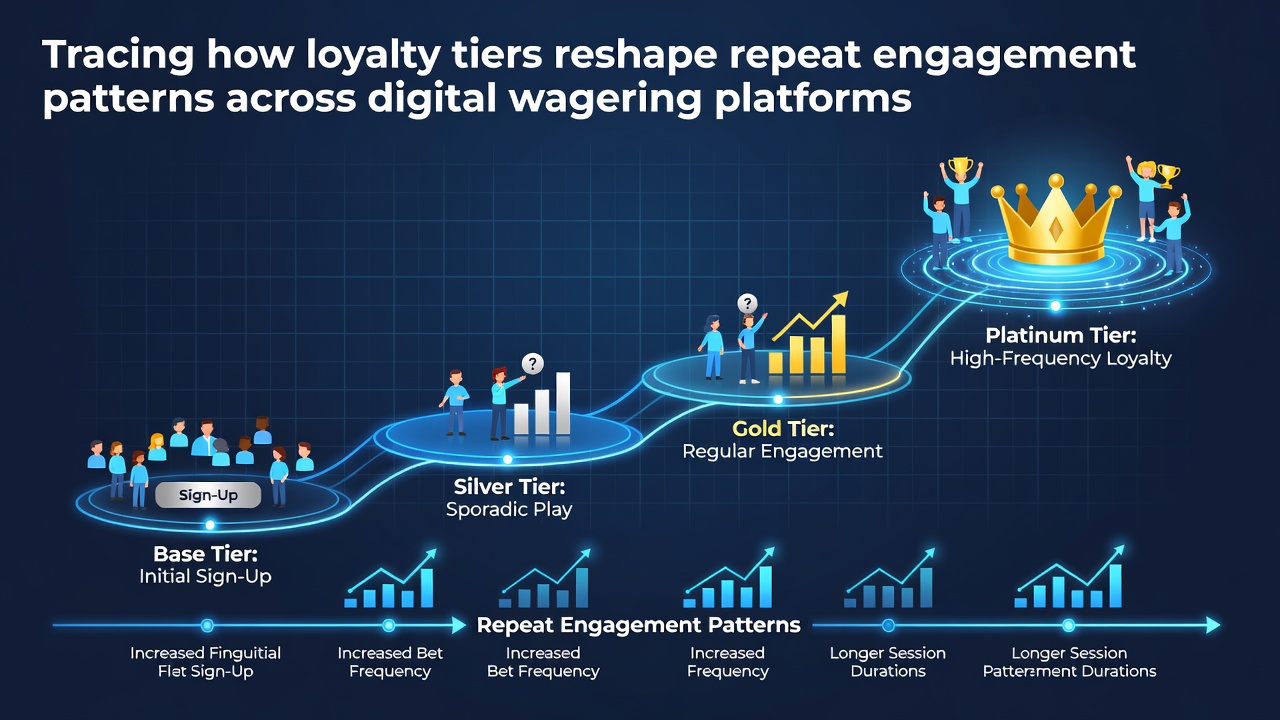
Loyalty tiers function as structured reward mechanisms that segment users based on cumulative activity metrics such as deposit volume, wager frequency, and session duration; these systems assign participants to ascending categories that unlock escalating benefits including cashback percentages, accelerated withdrawal processing, and exclusive promotional access. Platforms implement these tiers through algorithmic tracking that monitors real-time behavior and adjusts status levels at defined intervals, often monthly or quarterly, which in turn influences how users plan their subsequent interactions. Data collected across multiple operators reveals that users in mid-tier categories demonstrate a 35 percent increase in weekly login rates compared with entry-level participants, while top-tier individuals maintain consistent engagement patterns that span several consecutive months without interruption. Such patterns emerge because the tangible incentives tied to each level encourage incremental activity thresholds that users must meet to retain or advance their status.Mechanics of Tier Progression and Behavioral Adjustments
Entry into higher loyalty brackets requires users to accumulate points derived from eligible wagers and deposits, with multipliers applied during promotional windows that accelerate advancement. Once attained, these tiers deliver benefits calibrated to spending history, and operators adjust the point accrual formulas periodically to balance retention goals against operational costs. Observers note that this calibration process produces measurable shifts in repeat engagement, particularly when users approach tier boundaries and intensify activity to secure upgrades.
By July 2026, several platforms had introduced dynamic tier resets that align with major sporting calendars, resulting in concentrated engagement spikes during those periods as users sought to lock in elevated rewards before the cycle concluded. The approach ties progression directly to event-driven wagering volumes, which sustains participation across extended timeframes rather than isolated sessions.
Observed Shifts in Deposit Frequency and Session Length
Analytics from platform dashboards indicate that tiered rewards correlate with elevated deposit regularity, as users in advanced categories schedule recurring transfers to maintain qualification thresholds. Session lengths extend correspondingly because ongoing benefits such as personalized odds boosts or loyalty-exclusive markets provide continuous motivation to remain active. Research from the American Gaming Association highlights similar retention dynamics in regulated markets, where structured reward ladders produce sustained participation curves across digital channels.
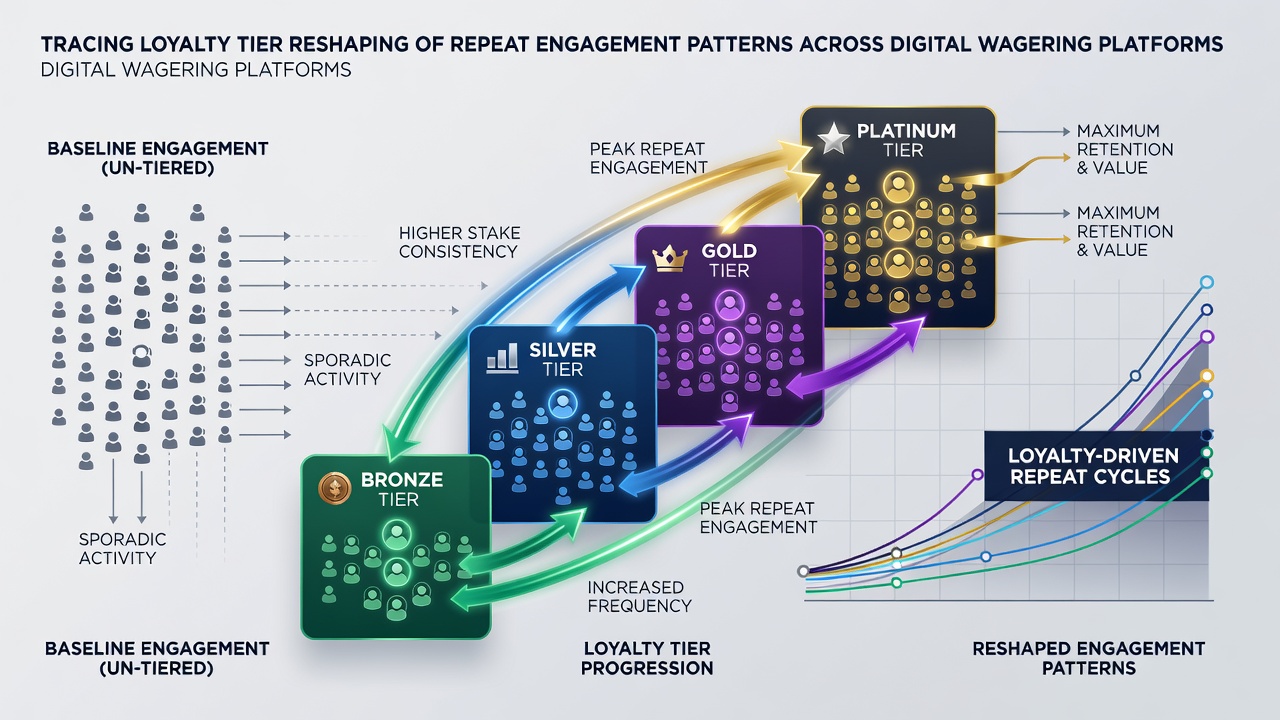
Those who track user cohorts report that individuals who reach silver or equivalent tiers within the first quarter exhibit a 28 percent higher likelihood of completing at least four deposits per month thereafter. Higher tiers further amplify this effect, with gold and platinum users showing average session durations that exceed baseline figures by more than 40 minutes, reflecting the pull of accumulated privileges that would otherwise lapse without continued play.
Comparative Patterns Across Global Markets
Platforms operating in North American jurisdictions display tier structures that emphasize cashback accumulation and VIP event access, whereas European operators integrate tier benefits with regulatory-compliant responsible gaming tools that still maintain engagement incentives. Australian market data from the Productivity Commission reports demonstrate parallel outcomes, where loyalty segmentation drives repeat wagering cycles through progressive reward scaling. These regional variations produce distinct engagement signatures yet converge on the core observation that tier advancement reliably extends user lifespan on each platform.
Cross-platform comparisons further reveal that users who migrate between sites often replicate prior tier achievements within shorter timeframes on new platforms, indicating that established engagement habits transfer when reward structures remain comparable. Operators respond by refining their tier criteria to capture these mobile users and convert one-time migrations into sustained activity loops.
Conclusion
Loyalty tiers reshape repeat engagement by linking incremental benefits to measurable activity benchmarks, which produces predictable extensions in login frequency, deposit consistency, and session duration across digital wagering environments. Evidence from multiple markets confirms these systems sustain participation patterns that persist beyond initial acquisition phases, while ongoing refinements in July 2026 and beyond continue to align tier mechanics with seasonal wagering trends. The resulting engagement architecture supports stable user bases without requiring constant acquisition spending, establishing tier progression as a central driver of recurring platform interaction worldwide.